Lippan Art Meaning Explained with Examples from Lippan Art Mirrors Design
That’s the real magic of Lippan Art. It isn’t just a craft; it’s a story. A tradition. A symbol of community life in the Kutch region of Gujarat. And today, as more people rediscover handmade art forms, understanding the Lippan art meaning gives the artwork a deeper emotional connection.
In this article, we’ll explore the origins, symbolism, and modern interpretations of Lippan Art, especially how Lippan art mirrors shape the identity of these beautiful mud-mirror designs. Along the way, you’ll see why this craft continues to inspire artists, homeowners, and culture lovers around the world.
What Is the Meaning of Lippan Art?
Lippan Art, traditionally known as “mud mirror work,” comes from the Kutch region of Gujarat. The word Lippan simply means “to apply” or “to plaster.” Historically, artisans used a blend of clay and camel dung to decorate the walls of their homes.
But this was far more than wall decoration. Each motif—each curve and mirror—carried meaning.
For the Rabari community, Lippan Art reflected:
A connection to nature
Spiritual beliefs
Daily life and rituals
Protection from negative energy
So when we ask about the Lippan art meaning, we’re really asking about the cultural purpose behind those symbols. The art wasn’t made to impress guests. It was made to bring harmony into the home.
The Cultural Significance Behind Lippan Art
For generations, women of the Rabari tribe created these designs by hand. They weren’t trained artists; they were storytellers using clay as their language.
A circle often represented the sun, believed to bring strength.
A diamond signified nourishment and fertility.
Peacocks symbolized beauty and good luck.
Flowers hinted at purity and celebration.
The motifs were simple but meaningful, shaped by everyday life—rainfall, animals, crops, festivals. And when mirrors were added, the art came alive.
Why Mirrors Are Central to Lippan Art Designs
The use of mirrors in Lippan Art is not just for decoration. In the desert landscape of Kutch, sunlight plays a huge role in daily life. Homes were made of mud walls, which kept interiors cool but dim. Small mirrors embedded into the walls reflected natural light inside, brightening the space throughout the day.
Over time, mirrors took on symbolic meaning as well.
They were believed to ward off negative energy.
They stood for clarity and purity.
They added vibrancy to an otherwise muted desert palette.
Today, when artists use Lippan art mirrors—round, diamond, teardrop, square—they’re not just adding shine. They’re continuing a centuries-old practice of using light as part of the art.
How Lippan Art Meaning Has Evolved in Modern Times
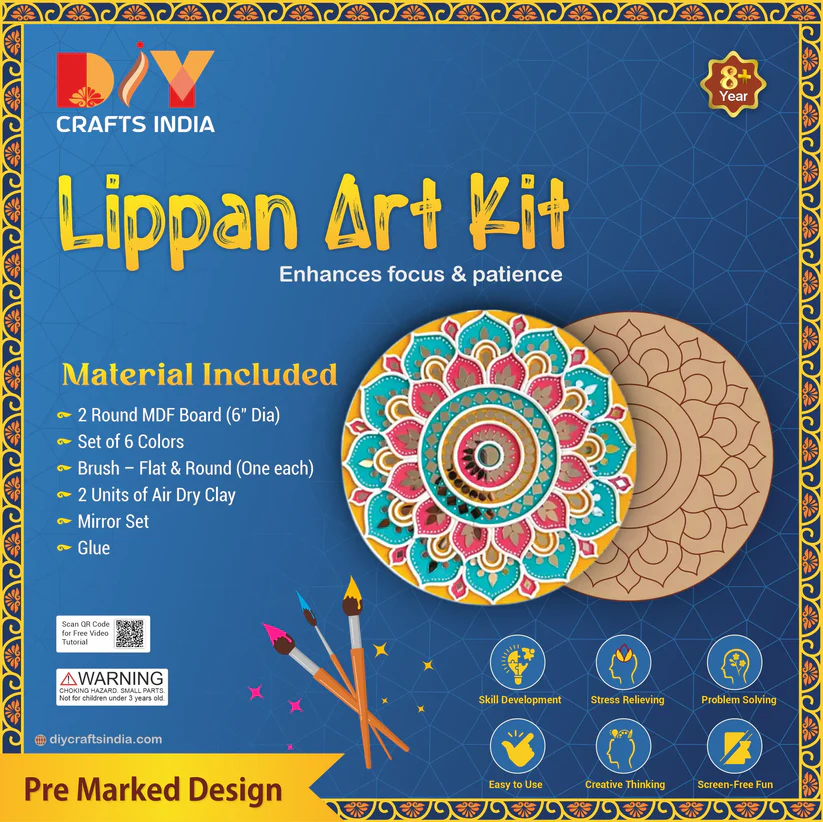
While the roots of Lippan lie in tradition, its modern identity has shifted. Instead of camel dung, people use air-dry clay or Mouldit clay. Instead of mud walls, artists use MDF boards. Mirrors come in dozens of shapes, polished for finesse rather than handmade imperfections.
But the essence remains the same.
Modern Lippan Art still symbolizes:
Warmth in the home
A connection to culture
A respect for handcrafted beauty
A celebration of light and shadow
Even if you create a simple mandala using clay and mirrors, it carries the same spirit as the traditional designs—just adapted for contemporary spaces.
Examples of Lippan Art Mirror Designs and Their Meaning
Let’s explore a few popular motif styles and how mirrors transform them.
1. Sunburst Mirror Designs
The sun motif is deeply rooted in Indian culture. When mirrors radiate from a central clay circle, the artwork symbolizes strength, positivity, and divine energy. Sunburst Lippan pieces often hang at home entrances because they create an uplifting first impression.
2. Mandala-Style Lippan Art
Mandalas represent balance and cosmic unity. When mirrors are placed in repeating circles or symmetrical points, they enhance the meditative quality of the artwork. Many people display Lippan mandalas in meditation corners.
3. Peacock Motifs with Mirror Highlights
Peacocks stand for beauty, grace, and celebration. Mirrors highlight their feathers, bringing rhythm and movement to the design. These pieces work beautifully in living rooms and festive décor.
4. Floral Mirror Designs
Flowers symbolize purity and new beginnings. When mirrors are added to the center or tips of petals, the artwork feels delicate and elegant.
5. Geometric Mirror Patterns
Diamonds, squares, and triangles reflect harmony, protection, and groundedness. These motifs are common in traditional tribal art and are often created entirely with mirrors and slim clay borders.
Each design may look modern, but the underlying meanings carry the wisdom of generations.
The Emotional Meaning of Making Lippan Art Today
There’s something deeply calming about rolling clay, shaping motifs, and placing mirrors. Many artists say they feel connected to the women of Kutch who shaped the same motifs centuries ago. That shared creative spirit makes Lippan Art feel timeless.
If you create a Lippan piece today:
Your clay lines represent your focus.
Your mirrors reflect your home’s light and warmth.
Your design becomes part of your story.
That’s what makes understanding the Lippan art meaning so beautiful—it’s not just about what you create, but how it makes you feel.
Why Lippan Art Appeals to Modern Collectors and Art Lovers
Beyond its traditional meaning, Lippan Art has become a statement piece in modern homes. It blends perfectly with minimalist interiors, bohemian themes, rustic décor, and festival styling. The earthy clay texture contrasts beautifully with the sparkle of mirrors, making it both grounded and glamorous.
Art lovers appreciate it because:
It’s handmade
It carries history
Every piece is slightly unique
It balances tradition with trend
And for people who love culture and craft heritage, Lippan Art serves as a reminder of India’s rich artistic past.
Learning Lippan Art Helps Preserve Its Meaning
When you create or collect Lippan Art, you’re not just making décor—you’re keeping a cultural legacy alive. This is especially important today, as many traditional crafts risk fading away.
Even something as simple as choosing the right mirrors, or following the rhythm of traditional motifs, contributes to maintaining the authenticity of the craft.
So the next time you place a mirror into your clay design, remember: you’re continuing a story that started centuries ago in the desert homes of Kutch.
Conclusion
Lippan Art is far more than clay and mirrors. It is light, culture, expression, and heritage—all molded into patterns that feel both ancient and contemporary. Understanding the Lippan art meaning helps you appreciate the craft on a deeper level, whether you’re creating it yourself or simply admiring it in your home.
The mirrors symbolize clarity and protection.
The motifs tell stories rooted in community life.
The clay reflects the earthiness of Indian tradition.
And together, they form a craft that continues to shine—quite literally—across time.
So explore it. Learn it. Display it proudly.
Because every Lippan piece, no matter how simple, carries a little bit of history and a whole lot of heart.
FAQs
1. What does Lippan Art symbolize?
Lippan Art traditionally symbolizes harmony, light, cultural identity, and protection through its motifs and mirrors.
2. Why are mirrors used in Lippan Art?
Mirrors brighten the artwork by reflecting light and were historically believed to ward off negative energy.
3. Do modern Lippan Art pieces use traditional materials?
Today’s artists use clay and MDF boards instead of mud walls, but the essence and meaning remain the same.
4. Is Lippan Art difficult to learn?
Not at all. The motifs are simple, and the process is calming, making it beginner-friendly.
5. Where does Lippan Art originate from?
It comes from the Kutch region of Gujarat, where the Rabari community practiced it for generations.